


Blog
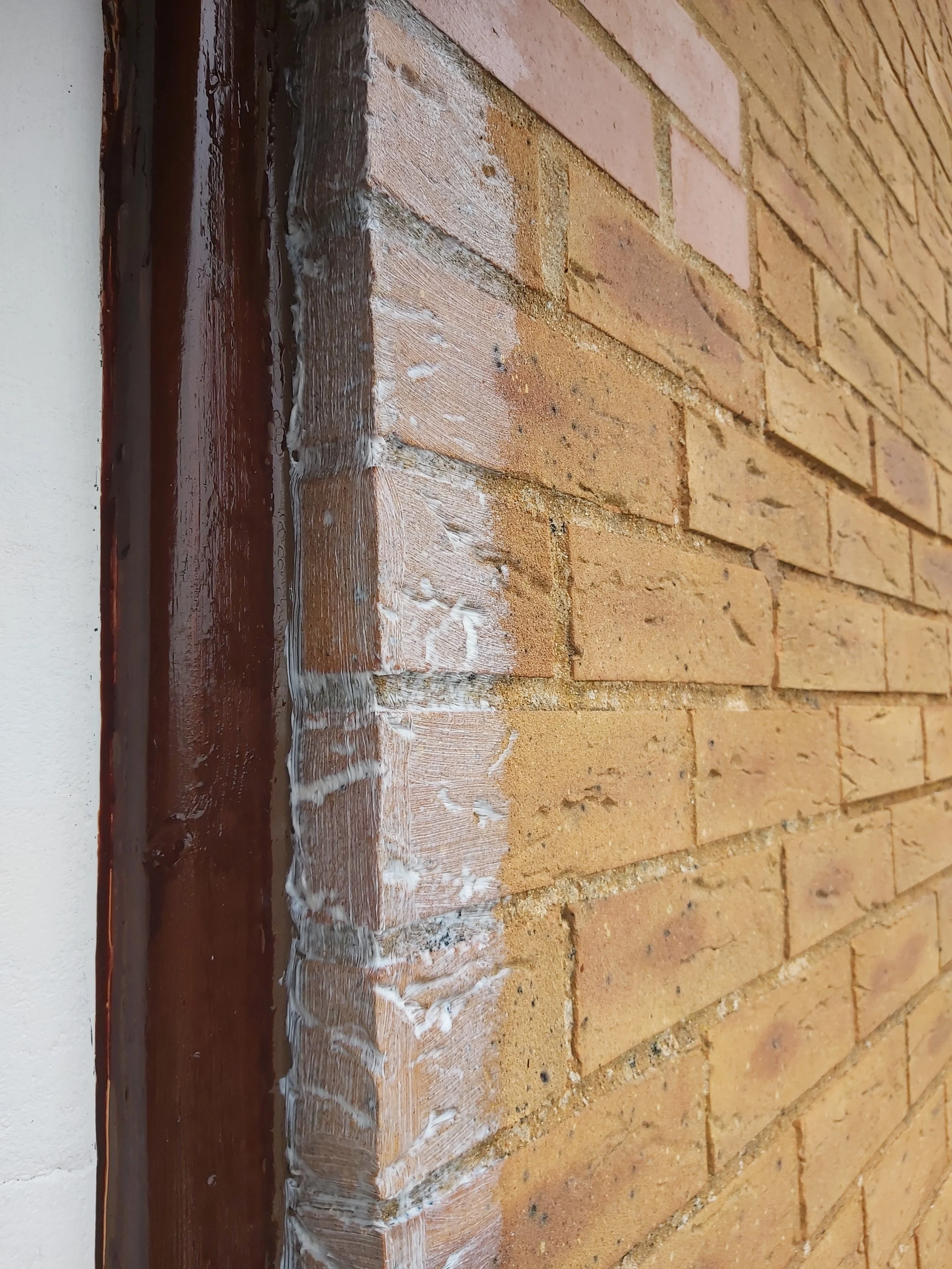
Where Is the Weather Getting Into Your Home?
Your home doesn't usually fail in the middle of a wall. It fails at the edges — where timber meets masonry, where a frame meets a sill, where the sealant gave up three winters ago and nobody noticed. As always – it’s the details that count.
Here in Dorset on the South coast, the weather doesn't knock politely. Wind-driven rain off the Channel finds every failed mortar joint, every shrunken bead of silicone, every hairline gap between a door frame and the stonework it sits in. And once water is in, it doesn't leave quietly — it rots timber, blows paint, stains plaster and quietly runs up a repair bill that could have been a maintenance bill instead.
At Upcycle Interiors Ltd (UIL) we spend a lot of our year at exactly these junctions. So for this post we've pulled together four recent exterior projects — doors, frames, pointing and weatherproofing from Weymouth to Poundbury — that all tell the same story from different angles: look after the edges, and the rest of the house looks after itself.

3-Day Power Cut - Are You Ready For An El Niño Winter?
It's 6pm on a Tuesday in December. The lights go out, the router goes dark, your phone is on 23% — and the kettle, the one thing you really want, has just become a 3,000-watt ornament.
Now imagine it stays that way until Friday.
That isn't a disaster-movie plot. After Storm Arwen in November 2021, around 40,000 customers were without power for more than three days, and nearly 4,000 for over a week. This autumn, forecasters are watching the strongest El Niño ever recorded — and it has tilted the odds towards a wetter, stormier start to our winter.
At Upcycle Interiors Ltd (UIL), we spend our working lives making homes better to live in. This post is about keeping them liveable when the grid lets you down — and doing it the green way. It goes hand in hand with our Green Practices page: reduce, reuse, recycle, and be honest about what actually works.

3-Day Power Cut Part 2 - How Do You Make Your Own Green Power?
At Upcycle Interiors Ltd (UIL), we spend our working lives making homes better to live in, and that includes keeping them liveable when the grid lets you down — the green way. In Part 1 we covered the first 72 hours and worked out a three-day power budget of about 400Wh: two phones, an LED lantern, a router for a few hours and an hour of laptop a day. This post is about making that electricity yourself. It goes hand in hand with our Green Practices page: reduce, reuse, recycle, and be honest about what actually works.
It's a long read, so here's the map. First the three free sources - sun, wind and a hand crank - with the honest sums. Then the hub that stores it all: a portable power station. Then the kit we're buying and testing ourselves, with a table showing exactly what plugs into what.