








Latest Blog Posts



Page Links


It's 6pm on a Tuesday in December. The lights go out, the router goes dark, your phone is on 23% — and the kettle, the one thing you really want, has just become a 3,000-watt ornament.
Now imagine it stays that way until Friday.
That isn't a disaster-movie plot. After Storm Arwen in November 2021, around 40,000 customers were without power for more than three days, and nearly 4,000 for over a week. This autumn, forecasters are watching the strongest El Niño ever recorded — and it has tilted the odds towards a wetter, stormier start to our winter.
At Upcycle Interiors Ltd (UIL), we spend our working lives making homes better to live in. This post is about keeping them liveable when the grid lets you down — and doing it the green way. It goes hand in hand with our Green Practices page: reduce, reuse, recycle, and be honest about what actually works.
At Upcycle Interiors Ltd (UIL), we spend our working lives making homes better to live in, and that includes keeping them liveable when the grid lets you down — the green way. In Part 1 we covered the first 72 hours and worked out a three-day power budget of about 400Wh: two phones, an LED lantern, a router for a few hours and an hour of laptop a day. This post is about making that electricity yourself. It goes hand in hand with our Green Practices page: reduce, reuse, recycle, and be honest about what actually works.
It's a long read, so here's the map. First the three free sources - sun, wind and a hand crank - with the honest sums. Then the hub that stores it all: a portable power station. Then the kit we're buying and testing ourselves, with a table showing exactly what plugs into what.
From humble beginnings of a one man band on a bicycle, to a full team and multiple vehicles, here’s a recap of everything Upcycle Interiors Ltd has achieved over the years.
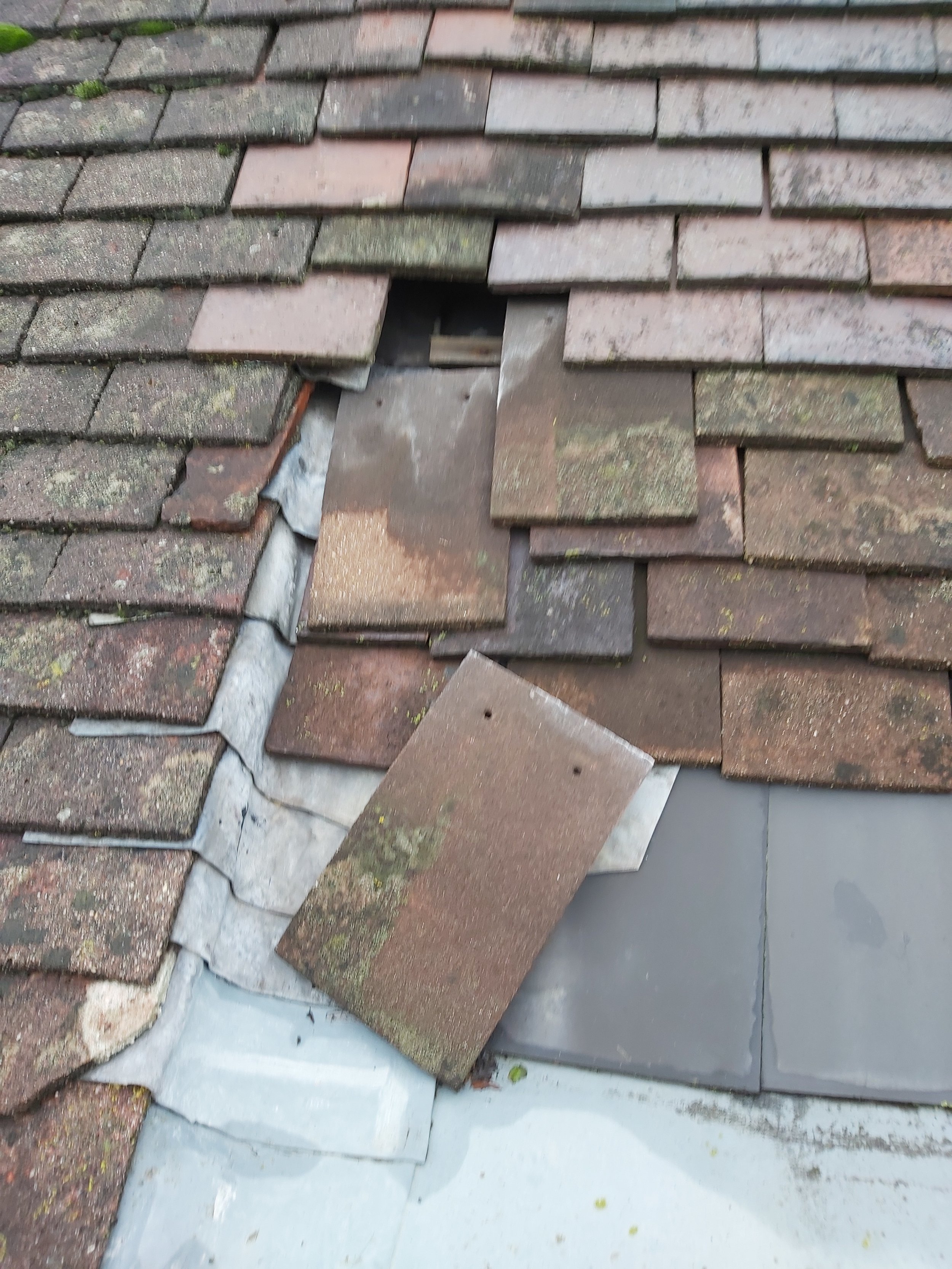
Here’s how it usually goes. A faint brown ring appears on a bedroom ceiling. You tell yourself it’s old, or it’s condensation, or it’ll dry out on its own. A few wet weeks later it’s bigger, darker, and there’s a smell. By the time water shows up on the inside of your home, it has already been getting in for a long time — and it has taken the scenic route through your roof timbers, your insulation and your plaster to get there.
Almost none of these problems begin where you notice them. A damp wall is often a blocked gutter. A stained ceiling is usually a slipped tile or tired & weather-beaten lead. A musty corner can be a single perished joint in a rainwater pipe two floors up. The cause is sometimes small, simple and easy to ignore. The consequence, left long enough, is none of those three things.
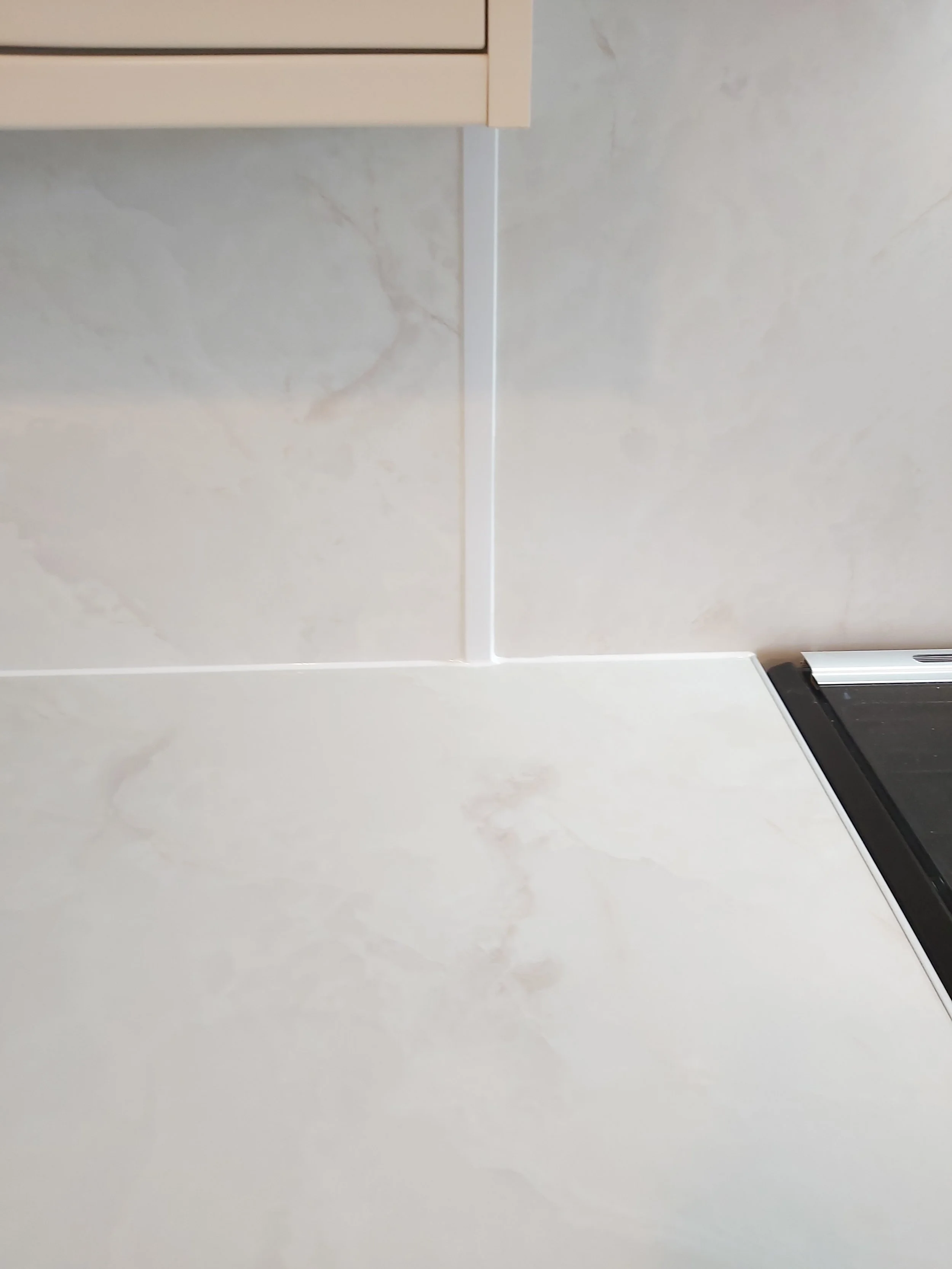
Picture a kitchen that’s barely a year old. Smart, clean, marble-effect splashback and matching compact laminate worktops - the lot. Then one corner starts to look… wrong. The crisp edge by the worktop has gone soft and lumpy, the joint has lifted, and what used to be a sharp and crisp line is now a swollen, blistered mess. On a kitchen that new, it’s about the last thing you expect to be looking at.
That is exactly what greeted us on this job in Dorchester. And the cause was no great mystery once we got up close. The splashback was made of MDF — and MDF, sat in the hottest, steamiest, wettest corner of the house with water quietly finding its way past a poorly sealed joint, behaves precisely how you would fear. It drinks. It swells. It blisters. The only real surprise was how quickly it had happened.