
How to Repair & Restore Painted External Stonework on Victorian-Era Homes
- 22 hours ago
- 4 min read
Victorian houses have a timeless appeal - but if you’re working with one that has weathered paint around the external stonework, broken bay windows, and worn architectural details around doorways and openings, you need a targeted approach for your property maintenance.
Below is a tailored guide to help you renovate, refurbish, and UPCYCLE external stonework on a heritage Victorian property while protecting its character and performance. This is highly practical advice for owners and renovators who want to RESTORE the paintwork on their stonework, especially around the facade, bay windows, and key structural openings like doors and windows.

1. Understand What You’re Working With
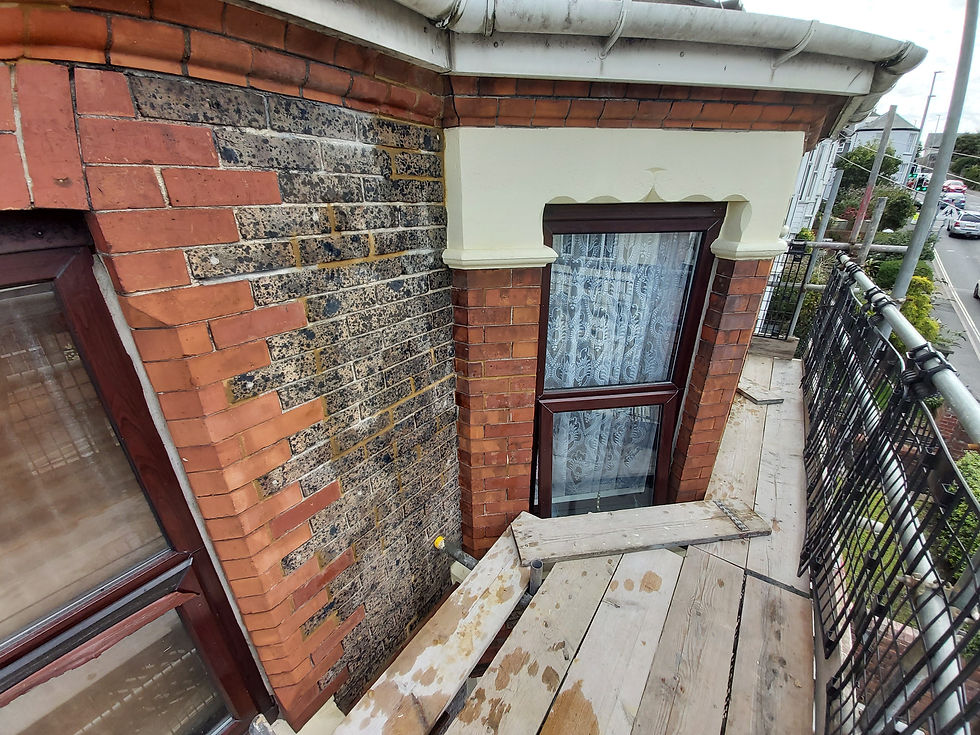
The stonework on a Victorian house isn’t just decorative - it’s part of the structure. Acid rain and wind can eat away at the surface, letting water get inside and wreak havoc. The freeze thaw effect will begin to break down the stone from the inside. Over the years many homeowners made the decision to paint the stonework. Painted stonework can be repaired without entirely replacing it.
Before you begin:
Inspect for cracks, spalling, and erosion in the stone faces.
Remove lose and crumbling material.
Check around bay windows and exposed lintels for water damage or rust staining.

2. REPAIR BEFORE REPLACE: Why It Matters
One of the biggest mistakes during a renovation is assuming you must replace historic stonework. In many cases, careful repair and restoration will be more effective, more sympathetic, and better value:
Use breathable paint that doesn’t trap water inside.
Cracks in stonework may need reinforcement or ‘stitching’, powdery and lose materials may need to be stabilised.
For complex features like detailed stonework, carved mouldings, arches, and bay window architraves, skilled repair is essential.
Where possible, always prioritise repair over replacement - this approach preserves historic craftsmanship.

3. RESTORE Original Stonework Around Openings
The areas around windows and doors are the most vulnerable to decay because they are the first points of water ingress. On Victorian homes, these are often stone lintels, sills, and reveals that are both structural and decorative:
Assess stone cills and drip moulds - if they’re cracked or worn flat, water will sit on the surface and drive moisture into walls. Drip details are very important to shed water away from the wall.
Around bay windows, the geometry and complex profiles demand precise detailing.
Look at whether original stone arches and mullions are cracked.
Effective exterior repair around bay windows and openings starts with getting the water management right: lead flashings, hidden trays, and correctly pitched sills make all the difference.
4. Respect Breathability and Building Physics
Traditional lime mortars work together to let moisture move through the wall. Modern additives - cement, impermeable paints, and some standard renders - block this movement, causing trapped moisture and accelerated stone decay.
When you refurbish:
Never repoint using cement.
Avoid non-breathable paint on stone elevations.
Where insulation is needed, consider internal insulation that doesn’t compromise the external stonework’s ventilation.
If the stonework isn’t already painted then consider if painting it is the right decision - possibly a specialist stone mason can replace small sections of stone rather than painting it.
The goal is to RESTORE original performance of the wall, not seal it up like a modern cavity wall.
5. Planning & Permissions for Heritage Stonework
If your property is listed or in a conservation area, local authorities are likely to require that you conserve and restore original stonework rather than replace it with modern alternatives. This particularly affects:
Bay windows and ornate stone surrounds
Doorway stone dressings
Decorative cornices and mouldings
Always check with your planning authority before undertaking major stone repairs or external alterations to avoid costly retrospective applications.
6. Practical Steps for a Successful Exterior Stone Renovation
Here’s a practical workflow you can use on your project:
Survey & condition report: Identify what’s structurally sound, what’s decayed, and what can be repaired.
Repoint with breathable mortar: Remove hard cement repointing and replace it with lime mortar.
Detail water shedding: Replace or repair cills, lead flashings, and bay window roofs so water is routed away.
Restore architectural features: Wherever possible, keep original stone - repair carved elements and use a specialist local stone company for installing matching stone for any inserts.
Refurbish around windows & doors: Focus on correct detailing at these junctions to avoid recurring issues.
Final Thought
When you repair, refurbish and renovate a Victorian property’s weathered external stonework, especially around bay windows, exterior details, door frames and windows, the objective isn’t just cosmetic. It’s about understanding traditional materials, prioritising breathability, and applying conservative, performance-based techniques that enable longevity.
This method respects the original craftsmanship while significantly improving durability and value - and it ensures your period home continues to perform beautifully for decades to come.
Get in Touch
📞 01305 584459
📍 Based in Weymouth 🌍Also covering Portland and Dorchester, including DT1, DT2 (part), DT3, DT4, DT5, DT6 (part). Please do get in touch here if your area is not on the list




Comments