Waste Removal - How to Properly Dispose of Rubbish and Prevent Fly Tipping in Your Community
Updated 22nd May 2026
Fly tipping is becoming an increasing problem across the UK, and unfortunately many people don’t realise they can still be held responsible for waste even after it leaves their property. That “cheap man with a van” offering a quick tip run for cash may seem convenient, but if your rubbish ends up dumped in a lay-by, field, or back lane, the consequences can come back to you like a boomerang wearing a hi-vis vest.
At Upcycle Interiors Ltd, we believe waste should be handled legally, responsibly, and ethically. Whether it’s household rubbish, renovation debris, or construction waste, using a properly licensed waste carrier protects both you and the environment.
Why Proper Waste Disposal Matters
Illegal waste disposal damages communities, harms wildlife, costs councils thousands of pounds to clean up, and contributes to pollution and antisocial behaviour.
According to GOV.UK guidance on household waste disposal:
“You could be fined if you give your household waste to someone who is not legally allowed to take it.”
Many people assume that once rubbish is collected, responsibility transfers automatically. Unfortunately, that’s not always the case. If waste is traced back to you after being fly tipped, you may still face enforcement action if you failed to check the carrier was licensed.
The government also states:
“If you use a private business that provides a waste collection service, you must check the company is on the register of waste carriers. You need to select ‘upper tier’.”
That “Upper Tier Waste Carrier Licence” is incredibly important. It shows the business is legally registered to transport and dispose of waste properly.
The Truth About “Tip Runs”
One of the biggest misconceptions is that tradespeople or waste collectors can simply take commercial or construction waste to the local household recycling centre, commonly called “the tip.” In reality, most council recycling centres are strictly for household waste only.
Dorset Council’s Household Recycling Centre Site Policy clearly states:
“Waste that has come from business or commercial activity cannot be disposed of at this site.”
The policy also warns:
“Dispose of business waste - this is illegal and carries a maximum penalty of £50,000, or up to 5 years imprisonment, or both.”
That includes:
Construction waste
Renovation debris
Trade waste
Waste produced by contractors
Waste from home businesses
Even if work is carried out at a domestic property, waste generated by a tradesperson is usually classed as commercial waste.
GOV.UK guidance on household waste explains:
“If you hire a tradesperson for construction or renovation work, any waste they produce is classed as business waste.”
So if somebody says they’ll “just take it to the tip,” alarm bells should start ringing louder than a wheelie bin rolling downhill in a storm.
What Is a Waste Transfer Note?
A Waste Transfer Note is a legal document showing:
What waste was collected
Who collected it
Where it is being taken
When the transfer took place
According to GOV.UK commercial waste guidance:
“You must complete a waste transfer note for each load of waste that leaves your premises.”
If a waste carrier cannot provide one, that is a major red flag. Keeping proper paperwork protects homeowners, landlords, businesses, and contractors alike.
Household Waste vs Commercial Waste
The distinction catches many people out.
Household Waste typically includes:
General household rubbish
Old furniture
Garden waste
Personal DIY waste within council limits
Commercial Waste includes waste from:
Tradespeople
Renovation projects
Construction work
Businesses operated from home
Landlords clearing properties
Shops, offices, salons, and workshops
GOV.UK commercial waste guidance states:
“Any waste that comes from a commercial activity is business waste.”
And Dorset Council adds:
“Items that have come from commercial activity, including work carried out by a builder or tradesperson on your behalf, will not be accepted at all.”
How To Protect Yourself
Before hiring anyone for rubbish removal:
✔ Check They Hold an Upper Tier Waste Carrier Licence
Ask for:
Their registration number
Company details
Proof of insurance
✔ Request a Waste Transfer Note
A legitimate company should provide this routinely.
✔ Avoid Cash-Only “Cheap Clearance” Deals
If the price sounds suspiciously low, there’s often a reason.
✔ Ask Where the Waste Is Going
Professional companies should be transparent about disposal methods and recycling facilities.
✔ Keep Records
Save invoices, transfer notes, and messages.
Tiny admin task. Massive protection shield.
Waste Removal Services From Upcycle Interiors Ltd
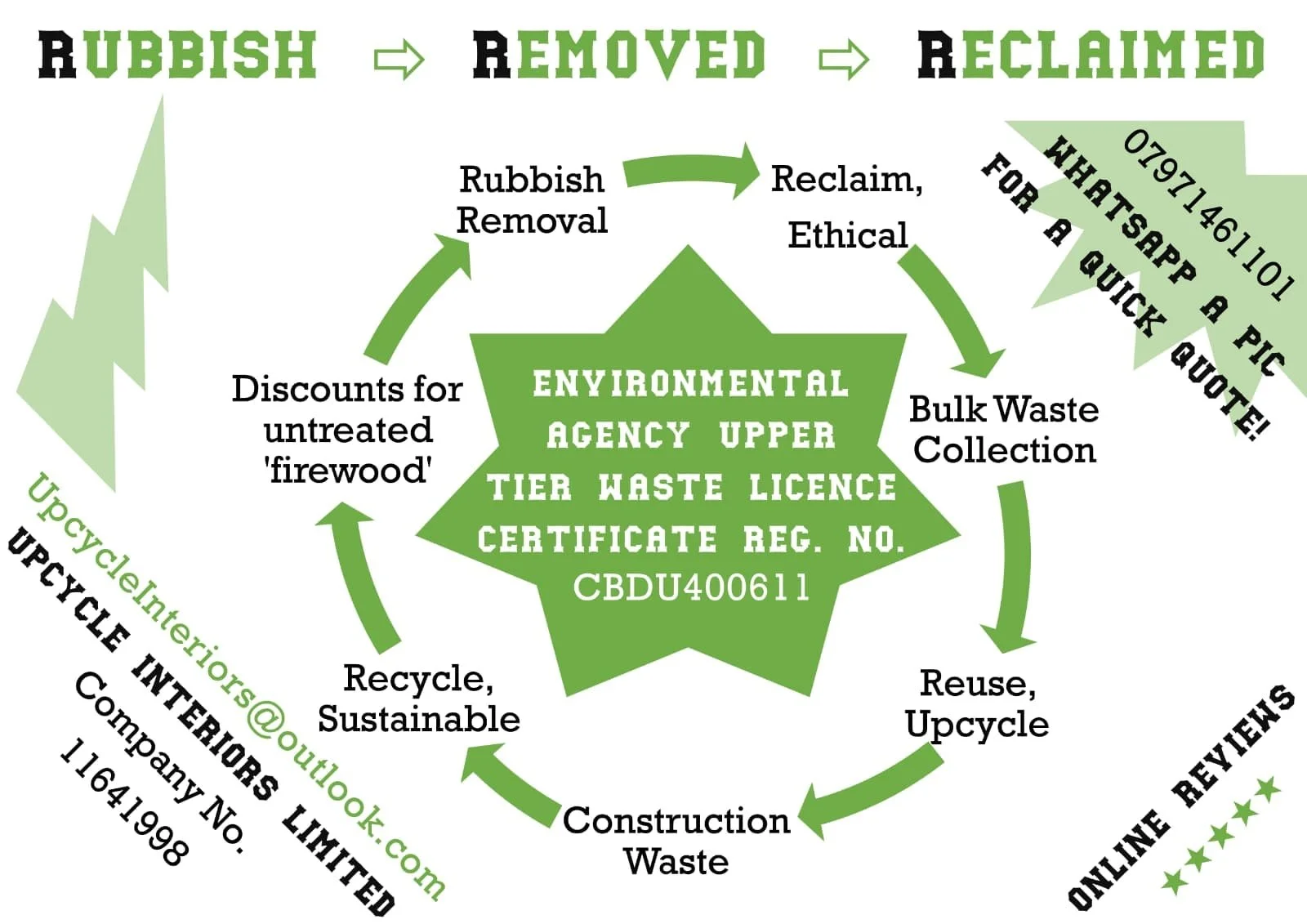
Upcycle Interiors Ltd holds an Upper Tier Waste Carrier Licence covering all forms of waste removal, including construction and renovation waste.
We provide:
Fully licensed waste collection
Waste Transfer Notes
Responsible disposal
Construction waste removal
House and garage clearances
Renovation debris removal
Unlike some operators, we do not dispose of commercial waste at household recycling centres.
Our approach is simple:
Legal disposal. Responsible handling. No shortcuts.
Fly Tipping Hurts Everyone
Fly tipping isn’t just an eyesore. It:
Pollutes waterways and soil
Harms wildlife
Costs taxpayers money
Creates hazards for communities
Damages rural and residential areas
Preventing it starts with responsible disposal and using licensed professionals.
Every properly disposed bag of rubbish is one less mattress in a hedge, one less pile of rubble in a gateway, and one less fox looking deeply disappointed beside an abandoned sofa.
A cleaner community begins with better waste habits.